Dating with Disabilities: Beyond Challenges to Real Connection
Dating with disabilities is still often discussed through assumptions rather than lived experience. Many expectations around attraction, intimacy, and relationship potential are shaped by stereotypes that do not reflect how real connections actually form. In practice, disability does not cancel emotional chemistry, mutual interest, or the desire for partnership. What it changes is not the value of connection itself, but sometimes the context in which that connection develops.
A more realistic view begins with understanding that dating is not only about appearance, convenience, or social expectation. It is about emotional fit, communication, trust, and the ability to build comfort with another person. For people with disabilities, this process may involve additional conversations, adaptations, or social barriers, but the core dynamics of connection remain the same. Respect, honesty, and mutual curiosity matter far more than assumptions about what dating “should” look like.
Dating with Disabilities Explained
Dating with disabilities explained in a modern and realistic way means recognizing that disability is one part of a person’s life, not the whole definition of who they are as a partner. Romantic interest does not disappear because someone lives with a disability, and meaningful relationships are not less valid or less deep because they may involve practical differences. What matters most is how people communicate, how they treat each other, and whether the connection allows both individuals to feel respected and emotionally safe.
One of the biggest misunderstandings comes from the way society frames dating. People often assume that disability automatically creates emotional distance, dependence, or limitation in relationships. In reality, these assumptions often say more about social discomfort than about the relationship itself. Many people with disabilities approach dating with the same hopes as anyone else: to be understood, valued, and genuinely wanted by someone who sees them as a whole person rather than as a condition.
A respectful approach changes everything. When dating begins with openness rather than assumption, the interaction becomes more honest and more human. Instead of focusing on what might be different, both people have a better chance to understand what actually matters between them. On an exclusive dating service, this is often where the strongest connections begin — not through idealized expectations, but through authenticity and emotional clarity.
Dating with disabilities should not be framed as an exception to “normal” dating. It is part of real dating life, shaped by the same need for compatibility, trust, attraction, and mutual effort. The more realistically it is understood, the easier it becomes to move beyond stereotype and toward genuine connection.
Relationship Challenges Disabilities Can Create
Relationship challenges disabilities can create are often more complex than people assume, because they are shaped by both practical realities and social attitudes. Some challenges are directly connected to accessibility, health needs, energy levels, or differences in routine. Others come from outside pressure, misunderstanding, or the quiet emotional strain created when a relationship is viewed through stereotype rather than reality. This is why the difficulty is not always the disability itself, but the environment around it.
Communication becomes especially important in this context. When needs, limits, or expectations are left unspoken, small areas of uncertainty can grow into larger tension. Open conversation helps reduce this pressure. It allows both people to move away from guessing and toward understanding. That kind of clarity is not a sign that the relationship is fragile. It is often a sign that both people are taking it seriously enough to make it work in a realistic way.
Another challenge can come from emotional assumptions. A partner may fear saying the wrong thing, seem too cautious, or overcompensate in ways that make the interaction feel less natural. The person with a disability may also carry frustration from past experiences, including being underestimated, fetishized, pitied, or misunderstood. These patterns can affect how trust develops if they are not handled with care.
At the same time, challenges do not automatically weaken the relationship. In many cases, they encourage better communication, stronger honesty, and a more intentional form of closeness. When both people are willing to listen, adapt, and stay emotionally present, the relationship becomes more grounded. The real issue is not whether challenges exist, but whether the couple can face them together without letting fear or assumption define the dynamic.
Love and Disabilities in Real Relationships
Love and disabilities in real relationships show very clearly that emotional connection is not determined by physical condition. Love grows through attention, trust, care, and the feeling of being emotionally known by another person. These things do not depend on having the “easiest” dating experience or fitting an idealized image of partnership. They depend on whether two people are able to build a bond that feels honest, safe, and mutually valued.
In real relationships, disability may influence certain practical aspects of daily life, but it does not remove the emotional foundations that make love possible. People still fall for the way someone thinks, listens, responds, supports, and shares life. They still build trust through consistency. They still become close through vulnerability, humor, shared habits, and the repeated experience of being understood. These are the same mechanisms through which any meaningful relationship develops.
Trust often becomes especially important. A person needs to feel that they are not being reduced to their condition or treated as emotionally secondary. When that trust is present, the relationship becomes less performative and more real. Both people can stop managing assumptions and start building genuine emotional closeness.
It is also true that real love usually involves adaptation. But that is not unique to disability-related relationships. Every serious partnership requires adjustment, patience, and learning. The difference here is that those adjustments may be discussed more openly or noticed more clearly. In many cases, that openness can actually strengthen the bond, because it encourages honesty from the beginning.
Love and disabilities in real relationships are best understood through reality, not myth. Emotional intimacy does not become less meaningful because the relationship may require more awareness. If anything, the need for trust, respect, and open communication often makes the connection more intentional and more deeply rooted.
Read also: Why Emotional Distance Appears and What It Usually Means
Dating Expectations for Disabled People
Dating expectations for disabled people are often shaped by two powerful influences at the same time: personal hope and social assumption. On a personal level, most people want what nearly everyone wants from dating — attraction, honesty, emotional safety, companionship, and the possibility of building something meaningful. At the same time, those expectations may be complicated by social attitudes that still rely on outdated ideas about desirability, independence, and what relationships are supposed to look like. That is why expectations in this context deserve to be examined openly rather than left vague or misunderstood.
Personal expectations and emotional readiness
One of the most important parts of dating is understanding personal expectations clearly. This includes knowing what kind of connection feels right, how quickly emotional closeness should develop, and what kind of communication creates comfort rather than pressure. For disabled people, this process can carry additional emotional weight because past experiences may influence how openness, vulnerability, or rejection are interpreted.
Emotional readiness also matters here. Sometimes people enter dating with hope, but also with protective habits shaped by previous misunderstanding or judgment. This does not make connection impossible. It simply means that expectations often need to be handled with greater clarity and care. When a person understands their own needs and boundaries, it becomes easier to build a relationship that feels stable instead of uncertain.
Role of honesty and realistic communication
Clear expectations reduce emotional confusion. When two people understand what they want, what pace feels natural, and what kind of relationship they are trying to build, the connection usually develops with less tension. Honest communication about comfort levels, practical realities, emotional boundaries, and long-term intentions does not make dating less romantic. In most cases, it makes dating feel more real and less stressful.
It is also important to avoid overcompensation. Sometimes one person tries too hard to appear effortless, while the other tries too hard to appear endlessly understanding. Both reactions can make the interaction feel unnatural. A stronger dynamic forms when both people are allowed to be direct, curious, and realistic without turning the connection into a performance.
Expectations work best when they are shared
On platforms such as a European women dating service, this difference often becomes visible in how people present themselves and respond to others. The most meaningful connections usually begin not with polished self-protection, but with emotional honesty and respectful clarity.
Aligned expectations do not guarantee a perfect relationship, but they make misunderstandings less likely. They help both people move toward each other with more confidence, less guesswork, and a much stronger chance of building something genuine.
Disability and Intimacy Explained
Disability and intimacy explained realistically means moving beyond simplification and understanding that intimacy is much larger than physical expression alone. Real closeness is built through trust, comfort, communication, emotional safety, and the ability to be fully present with another person. Physical intimacy matters, but it does not exist in isolation from emotional connection. In many cases, intimacy becomes stronger when it is approached as something shared, discussed, and shaped by mutual understanding rather than assumption.
One of the biggest problems in public discussion is that intimacy is often reduced to narrow expectations about physical function or conventional romantic scripts. This creates unnecessary silence and makes the subject feel more complicated than it needs to be. In reality, intimacy is deeply personal in every relationship. It depends on what makes both people feel safe, wanted, respected, and connected. That is true whether disability is present or not.
Trust plays a central role here. A person needs to feel accepted without fear of pity, discomfort, or judgment. They need space to communicate needs, boundaries, preferences, and uncertainties honestly. When that kind of emotional safety exists, intimacy becomes less about meeting an external standard and more about building something authentic between two people.
It is also important to recognize that intimacy often develops gradually. It does not need to be fully understood or defined at the beginning of the relationship. What matters is that both people stay open, respectful, and willing to communicate. This creates a much healthier foundation than pretending everything should feel automatic.
Disability and intimacy are not separate topics from love or partnership. They are part of how connection becomes real. When intimacy is understood through trust and mutual comfort rather than stereotype, it becomes easier to see it for what it really is: an evolving, shared experience shaped by honesty and emotional closeness.
Dating Inclusivity and Mutual Respect
Dating inclusivity is not simply about being polite or open-minded in a general sense. It is about creating a relational environment where people are treated as full individuals rather than filtered through assumptions. Inclusivity in dating means recognizing difference without turning that difference into the center of the entire interaction. It allows attraction, curiosity, and emotional connection to exist without being overshadowed by discomfort, pity, or social awkwardness.
Mutual respect is what makes inclusivity real in practice. Respect appears in the way someone listens, asks questions, accepts boundaries, and avoids turning the other person into a projection of their own fears or ideas. It also means not assuming fragility where there may be strength, and not assuming limitation where there may be full emotional availability. Respect creates equality because it allows both people to participate in the relationship as active, self-aware individuals.
Healthy dating dynamics depend on this equality. When one person is subtly positioned as “different” in a way that affects how they are treated, the connection becomes harder to sustain authentically. But when both people are allowed to show up honestly, with the same emotional dignity, the relationship becomes much more balanced. Inclusivity is not about pretending differences do not exist. It is about making sure those differences do not erase mutual humanity.
This kind of atmosphere helps attraction develop more naturally. People relax more when they feel seen accurately and not reduced to one aspect of themselves. That emotional ease often leads to better communication, stronger trust, and more realistic connection.
Dating inclusivity matters because real relationships need more than interest alone. They need a foundation where both people feel respected, equal, and emotionally safe enough to build something meaningful together.
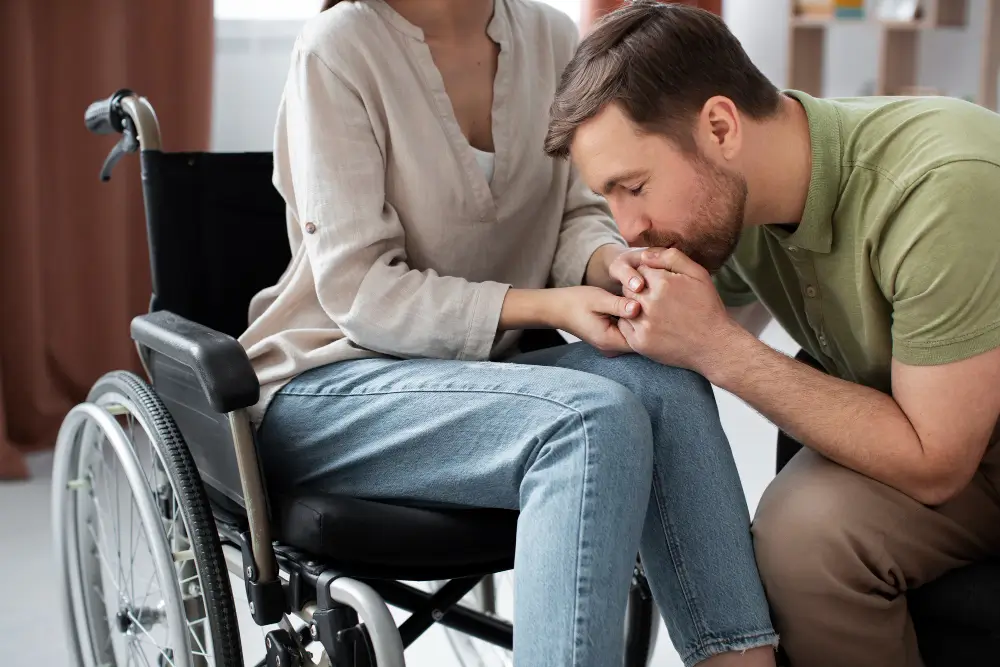
Relationships with Disabilities Explained Realistically
Relationships with disabilities explained realistically means looking at them without distortion, pity, or idealization. These relationships are not defined by tragedy, nor are they automatically inspirational simply because they exist. Like all real partnerships, they succeed or fail based on communication, trust, mutual care, compatibility, and the willingness to navigate life together in a grounded way. Disability may shape some practical realities, but it does not erase the basic structure of how healthy relationships are built.
A realistic perspective begins with rejecting myths. One common myth is that disability makes relationships fundamentally less romantic or less fulfilling. Another is that love in this context must depend on sacrifice rather than mutual attraction and partnership. Both ideas are misleading. Strong relationships are not created by denying difficulty, but neither are they defined only by it. They are created when two people consistently show up for each other, respond with honesty, and build emotional safety over time.
What makes these relationships sustainable is often the same set of qualities that matter everywhere else: openness, patience, emotional steadiness, and clear communication. In some cases, these relationships may require more explicit conversation around needs, adaptation, or practical routines. But that does not make them weaker. It often makes them more deliberate and more honest.
Realism also means acknowledging that challenges can exist without treating them as the whole story. Every serious relationship involves effort, adjustment, and vulnerability. What matters is whether both people can engage with those realities as partners rather than opponents.
Relationships with disabilities explained realistically lead to a more complete and human view of dating and love. When the focus shifts away from stereotype and toward actual relational dynamics, it becomes much easier to see what truly matters: shared values, emotional connection, reliability, and the ability to create a bond that feels genuine, balanced, and deeply real.